This Must Be the Place: The Perfect Storms in Vienna and Seattle
- Oct 4, 2018
- 7 min read

Out of all the special places in music history, the Classical giants that were influenced by Vienna in the eighteenth century and the Grunge movement that came out of Seattle in the 90’s stick out to me. Once more, these significant developments have common factors. Vienna was the place to be and a melting pot, whereas Seattle was the place a lot of bands were, and was a melting pot. Both environments were subject to a perfect storm of elements that produced remarkable music and allowed them to make their mark on music history.
Vienna
The three giant composers of the Classical period, Haydn, Mozart, and Beethoven, all had ties in Vienna. Haydn looked longingly to Vienna from his employed estate in Hungary. Mozart had high hopes when he went to Vienna towards the end of his life. Beethoven channeled their energy and carried it into the next era. (a) It is tempting to consider these three composers a “Viennese School,” but that would be a misnomer. None of them were born in Vienna, and only Beethoven spent a significant amount of his career there. There was too much variety of styles and too much diversity among genres. Also, other European centers produced music similar to Vienna. (b) (1)
Nevertheless, in the eighteenth century, Vienna was the musical capital of Europe. At the time, Austria was part of the massive Hapsburg empire which included a diverse population. The Hapsburg rulers had a knack for advantages alliances. Joseph II, “a true representative of enlightened absolutism,” believed in religious tolerance and made efforts to distance the state from the church. (a) Austrian composers around 1750 helped shape the Classical symphony style. The symphonies of Mathias Georg Monn (1717-50) and Georg Christoph Wegenseil (1715-77) included a minuet (2) as the third movement, something that would become a signature of Beethoven. (a) Johann Joseph Fux (1660-1741) was an Imperial Kapellmeister (3) in Vienna. His treatise on counterpoint was massively influential - Mozart & Haydn studied it. Monn’s symphonies had passages that are evident of Fux’s influence. (a)
The eighteenth century musical taste was dominated by variety of styles. Vienna, which showcased diversity, completely catered to this. The Viennese court at this time included regular opera and ballet productions, and employed composers from all over Europe. (b) As in other European cities, the court orchestra of Vienna had played to mixed audiences of nobility and the middle class. This contributed to the popularity of public concerts. St. Michael’s Square in Vienna housed the Burgtheatre, where Mozart performed his piano concertos in the mid-1780’s and where his operas Le nozze di Figaro and Cosi fan tutte were premiered. (b)
Haydn was a choirboy and studied music in Vienna. He would go on to spend most of his life and career woking at the Esterhazy estate in Hungary. It’s no secret that Haydn felt somewhat trapped there. Prince Esterhazy’s successor, Joseph II, had an estate in Vienna, and Haydn was able to he spent his last years there.
Mozart visited Vienna as a child composer, and there became influenced by Haydn. Also feeling stifled in his post in Salzburg, and very much against the wishes of his domineering father, in 1781 he went to Vienna and tried to be a freelance composer. He did well at first, but after about five years fell victim to the fickle taste of the public. Maybe, certainly in Mozart’s case, this was a downside to being in such a cosmopolitan city. He began to receive fewer commissions, and had no steady employment. Still, the inspiration of being in Vienna was paramount to shaping Mozart’s late works. “Most of the works that immortalized Mozart’s name were composed in Vienna between the ages of twenty-five and thirty-five, when the promise of his childhood and early youth came to fulfillment.” (b)
Beethoven was established in Vienna due to aristocratic support. He received lodging from Prince Karl von Lichnowsky, who sponsored concerts at his palace in Vienna and had a private orchestra. Beethoven performed regularly as a pianist, and taught piano in Vienna. He became known throughout Europe as the premier pianist and composer for piano, and his symphonies were thought to be on the same level as those of Haydn and Mozart. (b)
Seattle
Picture it: Seattle in the late-80s / early-90s: dark skies and a close-knit community. A small city that embraced a hippie counter-culture, it was a university town with a low cost of living. During this period, bands flocked to Seattle. The music scene was small, but dynamic; a rock epicenter.
In 1979 “The Rocket,” a local magazine debuted and documented the local scene. In 1981 an underground compilation called “Seattle Syndrome” came out. It included the top fifteen bands of the time, and incorporated hardcore punk, new wave, and rockabilly. It was a hit and foreshadowed the popularity of the underground scene that would birth Grunge. (c)
In the early 80’s, there was tension between the hardcore punk and metal scenes. The opening of an individual Seattle venue was able to appease the hostility. Gorilla Gardens had two stages, so different types of bands could perform on the same night. The crowds intermingled, setting the stage for Grunge. (b) The two sides actually began listening to each other’s music and began to appreciate it. Metal kids liked punk’s attitude, punk fans liked metal’s theatricality, and they were both annoyed by new wavers. (d)
It seems to be the consensus that the Grunge movement started with The Melvins in 1983, as they were the first step in mixing metal and punk - “like someone putting their chocolate in someone else’s peanut butter.” (d) In 1987 Nirvana and Alice in Chains formed. They were eventually signed to Columbia and Geffen, respectively, but the significance of the indie label Sub Pop can not be understated. Founded in 1988 by Bruce Pavitt and Jonathan Poneman, they tried to capture the Seattle sound of undergrounds bands in intimate venues. They also sent subscribers singles each month. (c)
Sub Pops’s marketing strategy was to create their own identity, and they did so with bands such as Mudhoney, Screaming Trees, Nirvana and Soundgarden. Bands were attracted to Sub Pop because of its non-conformist environment and the freedom from major label mandates. Essentially, the Sub Pop bands made music for their friends in a non-competitive atmosphere. (d)
During the late 80’s, a lot of Seattle bands were trading members,therefore creating a music scene that embraced “intense collaboration and perseverance.” (e) The Grunge movement came out of practicality: Seattle is isolated (remember, this is before everyone had the internet), it rains a lot, and there wasn’t much to do except drink beer and jam. Seattle’s dark and gloomy climate contributed to its sound. Each Grunge band had a distinct sound, but common threads are: guitar distortion, feedback, heartfelt and anguished lyrics, and a primitive sound verses refined skill. (c) “Musty garages create a certain noise.” (d) Live performances were more intimate and straightforward.
Overall, Grunge was the product of a distinct mix of: geography, environment, collaboration, the fusion of punk and metal, and independence. Basically, a mixture of “the two I’s: isolation and inbreeding.” (d) The movement was fueled by college radio, fanzines, and indie distributors.
Unfortunately, Grunge’s popularity was it’s undoing - a movement built upon nonconformity, authenticity, and an introverted city music scene is not built for withstanding mainstream success. This caused some bands to succumb to drugs (Alice in Chains), depression (Nirvana) and seclusion (Pearl Jam). Most Grunge bands were defunct by the late 90’s. (c)

Second Wave
Both Vienna and Seattle can be said to have experienced a second wave of musical significance. In the twentieth century, there was a bonafide Viennese School characterized by a new method of composition, the twelve-tone system (4), developed by Arnold Schoenberg (1784-1951). Schoenberg was born in Vienna, and taught there for a number of years. His atonal works (5) are the most concrete example of a twentieth century composer consolidating the expressive ideas and new materials that were present. (f) Schoenberg’s twelve-tone technique is present in the works of his students: Alban Berg (1885-1935) and Anton Weburn (1883-1945). Berg used numerical patterns to create warm and expressive structures that seemed to grow out of themselves. (f) Weburn’s music displays a focus on “economy and extreme concentration.” (b) His works are brief, and employ meticulous instrumentation and the serial technique. (6)
There has been a baby boom of bands coming out of Seattle in the 2000’s, including Iron and Wine (2002), Band of Horse (2004), Fleet Foxes (2006), The Head and the Heart (2009), and Odesza (2012).
Honorable mentions - other special places throughout music history: the Mannheim School in Mannheim, Germany had a renowned orchestra and greatly affected the evolution of the Classical symphony; Muscle Shoals in Alabama, home of the legendary FAME recording studio; artists made a special point of going to this small town with an almost mystical quality.

Click on the graph for the graphic conclusion!
Say What?
(1) Some may consider Vienna’s golden age to be that of the period of Brahms and Wagner, later in the Romantic era.
(2) a slow, stately ballroom dance for two in triple time, popular especially in the 18th century.
(3) a court musical director
(4) a technique that uses an ordered series of twelve different pitch classes (one of the twelve pitches of the chromatic scale, without reference to register)
(5) Music that avoids a tonal center
(6) Serialism - a method of composition that uses rows, or a series of twelve tones or pitch classes; may also be applied to other parameters, such as dynamics, timbre, texture.
Giving Props:
(a)Pauly, Reinhard G. Music in the Classic Period. 4th ed. Upper Saddle River: Prentice Hall, 2000.
(b)Donald J. Grout & Claude V. Palisca. A History of Western Music. 6th ed. New York: W.W. Norton & Company, Inc., 2001
(c)Vacations Made Easy: The Seattle Music Scene: A History from Past to Present: https://www.vacationsmadeeasy.com/SeattleWA/articles/TheSeattleMusicSceneAHistoryFromPasttoPresent.cfm
(d) Rolling Stone, “Grunge City: The Seattle Scene,” 1992: https://www.rollingstone.com/music/music-news/grunge-city-the-seattle-scene-250071/
(e)Culture Trip: “A Brief History of Grunge: The Seattle Sound,” https://theculturetrip.com/north-america/usa/washington/articles/a-brief-history-of-grunge-the-seattle-sound/
(f) Salzman, Eric. Twentieth-Century Music. 4th ed. London: Pearson, 2001
Shows Summer 2018

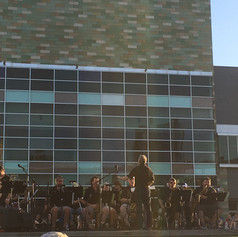


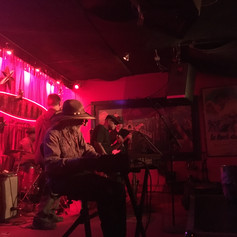
Austin Symphony Orchestra / Concert in the Park / Austin, TX / June 24, 2018
The Smashing Pumpkins / Austin, TX / July 16, 2018
Counting Crows / Austin, TX / July 21, 2018
The Blues Specialists / Austin, TX / August 3, 2018
Comments