And Then There’s the Music: The Inescapable Mythology of Joy Division
- Jun 19, 2022
- 14 min read

It is unfortunate that the music Joy Division is often overshadowed by the suicide of their lead singer, Ian Curtis, and the subsequent mythology that fostered. I knew Joy Division’s story before I knew their music. Seeing the movie Control prior to any active listening solidified the mythical quality of the band - or more specifically - Ian Curtis. The story of a twenty-three-year-old singer on the precipice of international success committing suicide is intrinsically compelling. Joy Division existed for four years, from 1977-1981. Such a short-lived story with limited capacity and a tragic ending almost begs for mythology. The more I learn about Joy Division and the more I listen, I realize that I exemplify the ideas of Simon Firth in his attempt to define an aesthetic of popular music. That is, because a collective interpretation was not accessible to me, I adopted the myth surrounding this band to accomplish the necessary step of individualization, and therefore assign a personal value to the music. (a)
The Industry
Joy Division was not known as such until 1979 (1) -- earlier names were Stiff Kittens and Warsaw. They released two full-length albums: Unknown Pleasures in 1979 and Closer in 1980. Curtis committed suicide in May of 1980, a few months before their second album was released. After his death, the remaining members of the band formed the band New Order. Too short-lived to gain international fame, they were not only confined to Manchester and surrounding areas, they were inextricably connected to the city. It is where they lived, and where they were from. It is where they performed most and where their label, Factory Records was located. Industry was key in Manchester, as opposed to agriculture which dominated the UK countryside. Culture was prominent in London, where record labels had signed many British punk and post-punk bands, such as The Buzzcocks and The Fall, contemporaries of Joy Division. Yet Manchester was a hub for pop music. At the time, the music industry in the city was characterized as DIY, via grassroots efforts and artists self-releasing their own music. According to Leonard Nevarez in his article “How Joy Division Came to Sound Like Manchester: Myth and Ways of Listening in the Neoliberal City,” Joy Division was the first important band to manage to bypass London and forge a career in Manchester. In addition to their independent label, their career was aided by Manchester’s “network of musicians, scene participants, and cultural institutions.” (b) In her memoir Touching from a Distance: Ian Curtis and Joy Division, Ian’s widow Deborah Curtis thoroughly chronicles the band’s origins, discography, and performances, as well as Ian’s intense struggle with epilepsy. A native of Manchester, she describes the setting eloquently: “The atmosphere was that of intense anticipation, as if a huge tidal wave was on it’s way and everyone was determined to be on it…Everyone seemed to congregate around the city centre. They were afraid of losing the momentum; scared of missing out on an impromptu meeting…they decided what they wanted to do and did it, be it pop photographer, producer, journalist, or musician. It was a deliberate snub of the London scene and, as far as music was concerned, Manchester was set to become the new capital.” (c)
Joy Division had their first gig in 1977 (as Warsaw), at the Electric Circus in Manchester. A year later, they had their first television appearance on Tony Wilson’s What’s On and soon after were signed to Factory. They were featured in British music weeklies and fanzines, and received ample coverage from local music journalists. They rarely had interviews, and if so, said very little. Out of their handful of TV performances, a few may have reached as far as Northern England. It was not until Sep. of 1979, three months after Unknown Pleasures was released, that they had a national TV appearance. They only played eleven shows outside of the UK, all of which were in Western Europe. Their audience at the time heard them via recordings (mainly vinyl) and concerts (mainly local). They did not have much radio airplay, but were regulars on a show hosted by John Peel. Joy Division’s success fell victim to the red tape within national media groups, licensing organization’s sporadic export system for independent music, and the “undeveloped touring infrastructure for punk groups.” (b) The band had sixteen recordings released during their existence. In addition to the two studio albums, these include individual and collaborative EP’s, live tracks, a song for a film, singles, and a limited pressing available in France only. In total, they played 133 shows, mainly in Manchester, but also in London quite often. The venues and events they played included: technical colleges, universities, a town hall, festivals, the YMCA, and a New Year’s Eve party. They played twenty-four shows as the opening act for The Buzzcocks, starting in Oct. of 1979. Many of their shows were back-to-back nights, and some were two or three-day stints at the same venue.
Joy Division’s struggle with the music business was natural -- apt for most bands, but particularly one in their setting. Deborah Curtis provides anecdotes of Ian’s oscillations between his pride and aspirations. By her accounts, Ian’s ambition could result in him being unlikable, if not unbearable. In describing his desire to be on TV, she states “Ian was frustrated as he felt that fame for his band couldn’t come fast enough.” He pressed bandmate Bernard Sumner to use his connections at Granada TV. (2) “Ian’s belief in what he was doing was ferocious and he failed to understand Benard’s reasonable timidity.” (c) Journalist and fan Paul Morley sheds light on the quintessential clash of creative aspirations and commercial frustration experienced by Joy Division. They were characteristically tight-lipped for their interview he did for a New Musical Express (NME) cover story in 1979, but he sensed something deeper: “even though the story mostly consisted of them looking, or waiting, or hoping, or praying for a break.” (d)
The Music
Joy Division’s assigned genre is post-punk. Their sound was characterized by Peter Hook’s melodic bass, Bernard Sumner’s guitar that refrained from filling the sonic space with riffs, and the passive drumming of Stephen Morris, who followed the rhythm of the band. (e) (3) To me, the quality and longevity of their music prevail over the mythology that Cutis’s suicide fostered. This is music that often yields such descriptions as sparse, metallic, beautiful, haunting, and sepulchral - yet it penetrates beyond those modifiers and earns its place in popular music history as not only substantial and authentic. The pillars of my standard for quality pop music are structure, sound, voice, lyrics, and overall authenticity, and Joy Division’s music has qualities that satisfy all my criteria for each pillar.
While I believe that Joy Division is a band that displays equality among all the instruments, Curtis’s voice is what solidifies them as an exceptional band to me. The unique quality of a singer’s voice is more important than the quality of the voice itself: the voice does not necessarily have to be good -- it is the way the singer chooses to articulate, inflect, and shape their voice around the words, within the music, to convey a message that matters. In this way, a singer in a post-punk band can be more talented, or rather, more effective, than a classically trained opera singer. Ian Curtis’s voice has this quality. A baritone with a small range, and more dissonant than melodic, he was able to convey incredibly effective changes in timbre, inflection, articulation, and delivery.
The producer of Joy Division’s two studio albums, Martin Hannett, is often credited with having at least some, if not a great deal, to do with their sound. Hannett’s production plays a significant part in moving the music of Joy Division beyond the myth of Joy Division. The collaboration has been called “one of the most perfect pairings in rock music history.” (f) All of the band members were dissatisfied with the difference between the polished studio sound and their aggressive live sound. However, in his 2012 book Unknown Pleasures: Inside Joy Division, Peter Hook “praises almost unreservedly how Hannett’s innovative work ensured a sound which, while much imitated, has not dated.” (g) This leads to a key aspect of Joy Division’s music that draws me to it: its timelessness. When I listen to one of their songs, it is not associated with the time in which it was created, like most other songs. Although they are a snap-shot in time, their sound has not aged. I believe this is due to the way all of the elements of the music are combined. This is a defining characteristic of a quality song to me - the distinct sonic combination that evokes a personal emotional reaction.
Joy Division’s songs are successful at using sonic elements to paint a picture. The dominance of industrial and mechanical sound effects leads to descriptions such as “atmospheric” and “creating a landscape.” In a flurry of controlled sound, they manage to make these sounds appear both sporadic and strategic. Their music is complex, and therefore grants listeners the capacity to appreciate music that is not as accessible. Their songs often break down and then surge again. If there is a change in the mood it is strategic and justified, and it does not venture too far from the established mood of the song, which are qualities of sound and structure I admire. Most importantly, the music displays authenticity and truth by its use of the elements. They draw you into their desolate atmosphere and irreparable paths.
Something that fascinates me about Joy Division is that they became a fully-formed band with a distinct sound within the span of four years. (4) Warsaw had a more quintessential punk sound. The sparseness of the more mature Joy Division sound came when they slowed down their tempo, drummer Stephen Morris joined the band, and when they changed their name to Joy Division in 1978. By the time they recorded Unknown Pleasures in 1979, with Hannett’s assistance, they honed the more frenzied sound of Warsaw into a mournful, deep sound. However, their second and last album, Closer, is considered their masterpiece. Their playing was more capable and they were more confident in their arrangements. It represents a band as a whole at the peak of their powers. Closer also represents the accelerated success they experienced in 1980. Just one year later, their experience was much broader. They had ventured out of the realm of Manchester, literally via touring, and musically.
Unknown Pleasures is complex, contradictory, and thought-provoking, all of which I regard highly in popular music. The songs have “disoriented melodies” and “punishing rhythms.” The music displays Curtis’s “alienated and fatalistic sensibility but could also jump and rush and push.” (i) Heavier songs like “Day of the Lords,” “New Dawn Fades,” “Shadowplay,” and “Interzone” contrast with the exactness and resolution of “Disorder” and “She’s Lost Control.” (f) I appreciate how the songs are somewhat cyclical, like self-contained units. I prefer music that draws the listener into it via adherence to the mood and emotion it creates, and the songs on Unknown
Pleasures are said to “fade in like emerging from the shadows.” (f)
One of the most noteworthy songs on the album is “She’s Lost Control.” The lyrics are obscure, yet outline a narrative. Like fiction, it feeds the listener pieces of information that build tension: escalating from a woman “clinging to a passer by” to one who “walked upon the edge of no escape.” This is a staple of great lyrics to me: to give the listener just enough information to cater to open interpretation. Frith addresses this in his discussion of performance. He contends that the plots of songs are first interpreted by performers, and then by listeners who place the singer’s emotions on their own stories by “laying the performance over our memories of situations and relationships.” (a) This is how I develop a personal connection to lyrics. I find myself projecting lyrics, either obscure or simple, to my own experience. “She’s Lost Control” represents a sonic combination of controlled chaos, which I applaud. It builds to a crescendo only to scale back, and then build up again. It’s a collection of precise sounds, strategically placed and brilliantly layered. The echoing of the voice is effective and the interplay between the other instruments is exquisite. The voice handles the repetitive lyrics by giving the repeated phrases different inflections. It is as if the song is a very controlled, self-contained unit.
Closer solidified Joy Division’s music as hauntingly beautiful. It is an album they would never promote live, due to honoring their pact to not continue with Joy Division if one of the members left. Here is an album that displays many aspects of quality pop music, including mild diversification within predominant homogeneity, precision and conciseness, and intriguing sonic combinations. “Twenty Four Hours,” with its surges in tempo and dynamics, may seem to be a fleeting escape from the bleakness of the album, but the following tracks “Eternal” and “Decades” confirm the prevailing gloom. The sparseness of their style has peaked, and the songs are even more economical. It is as if every sound has a specific purpose. “Heart and Soul” displays minimalism with its stumbling drumbeat, intertwining instruments, and suppressed vocals. Again, this calls on the listener to embrace unfamiliar sound combinations, without being completely inaccessible. This is “truly emotional music made by machines” that is “remarkably eloquent and effective.” (h) I agree that machine or not, this music displays authentic emotion, which is the most important aspect of my standard.
The first track on Closer is “Atrocity Exhibition.” The lyrics are based on the novel of the same name by J.G. Ballard. (5) There are many exceptional elements of this song. It does not follow the traditional pop song structure -- not that there's anything wrong with that, but I appreciate songs that deviate from the usual verse-chorus format. Another preferable quality is that it has what I consider a strong bridge -- it does not simply throw in something different as filler to get to the end, but rather adds something new to something we have heard before to provide a more satisfying transition. Curtis’s vocals use the nakedly honest lyrics to accurately portray a “petrifying scenario.” (i) Again there are repetitive and disturbing lyrics that solicit interpretation. As far as how the sonic elements are combined, “Atrocity Exhibition” displays brilliantly layered sounds, meticulously placed, and is “hypnotically abrasive.” (f)
It is probably impossible to say how the mythology surrounding Joy Division impacted my personal view of their music. Being as they only existed for four years and released two albums, they did not burn out or fade away like other bands; they did not put out a bad album. Therefore, it is likely that they hold a somewhat exalted status - a status that is apparent in both their “old” audience at the time, and their “new” current fan base. Because Joy Division was isolated in Manchester, their audience was as well. Not only was the band localized, but live performances were intimate, in small clubs and venues with the audience in close proximity. By most accounts, their live performances were intense and aggressive, and Ian held nothing back. His signature “dead fly” dance - “the flailing arms, glossy stare and frantic, spasmodic dancing” - came about before he was diagnosed with epilepsy. (j) (6) The fact that they were so connected to Manchester also displays Frith’s contention that social class contributes to collective taste. Savage claims that “they used pop music as the means to dive into the collective unconscious,” and that Manchester [was] an environment systematically degraded by an industrial revolution, confined by lowering moors, with oblivion as the only escape.” (j) Frith contends that pop music can create a sense of identity that may or may not fit in with an individual’s social norms, and in this way, it can reiterate that social circumstances are not unchanging, and that others share the same dissatisfaction. Nevarez states that “this particular punk era in Manchester is embedded in lyrics, music, performances, and recordings and collectively form an external collective taste, shared dissatisfaction.” (a)

The Audience
After they disbanded, Factory Records took advantage of New Order’s success and released recordings previously unavailable in the US, and Nevarez believes this contributed to their mythology. However, Joy Division’s current audience has expanded well beyond Manchester and the narrative surrounding them. They cast a wide influence, most directly on the bands U2 and The Cure. The high-pitched bass and theatrical, droning vocals transferred over to Gothic rock artists such as Siouxsie and the Banshees and Bauhaus. (k) Their praise is still present in the dialogue surrounding pop music history. (7) Indeed, the mythology is reflected in the conversation of a current fanbase - but so is their reach, longevity, timelessness, and legacy.
The writer and graphic designer Jon Wozencraft offers the possibility that Joy Division’s “landscapes are not confined to Manchester or the past.” To him, listeners now “navigate urban spaces under the spell of a personal soundtrack.” (l) I couldn't agree more, because this is how Joy Division came to me. Their current audience has to separate themselves from Manchester, and customize their experience. It was not possible for me to experience them in Manchester, to experience them during their time -- the individualization endorsed by Firth and Wozencraft was necessary for me.
Conclusion
When it comes to bands, I am a complete romantic. I want to hold an album in my hand – I want to pour over the liner notes. I am intrigued by lyrics that evoke various interpretations, and inevitably project them onto my life. I want to have a story for how a band comes to me, and it is not unusual for the permanence, the infatuation to come later. This is what drives the devotion I have to artists – the coming back around, and something that speaks to me to draw me in. Joy Division is that type of band for me. While I cannot separate myself from the mythology, I can definitively say that their music is not secondary. It is music that is a product of perfect timing and a vibrant culture; that established the archetype for post-punk by combining “tribal primitivism” with “sophisticated art-rock.” (f) Furthermore, I see and admire their nods to historical music: the propulsion and forward motion of Baroque music; songs that are mini-concertos, that treat all instruments equally and emphasize a give-and-take relationship; the narrative quality in the lyrics like program music that dominated the Romantic period; the fact the songs have “just as many notes as required” as Mozart’s character asserts in the play Amadeus, when it is suggested that his latest opera has “too many notes.” What primarily draws me to a band is the willingness to allow various interpretations, to let you in, to apply them to your life even if you were only three years old when they ceased to exist. Because it was not possible for me to experience Joy Division first-hand, my only option was to utilize the means available to me at a time when their mythology had long been established. I bought in, and I fell hard. I had to make them my own, which is the defining characteristic of bands and artists I love. And therein lies the value of their music to me.
Say What?:
(1) Curtis chose the name – given to German camp brothels during World War II -- both for his interest in German history, and strictly for shock value.
(2) Broadcast television in North West England
(3) According to Sumner, their sound that employed the high lead bass developed naturally; Sumner had an amplifier that would only work at full volume, and if Hook played in a low register, he couldn’t hear himself. (e)
(4) It has been noted that in the boom of musical developments in the late-70’s to early-80’s, there was a fast transition from punk to post-punk. (h)
(5) A collection of controversial stories published in the UK in 1970.
(6) By their last year, Ian would often have attacks onstage. (7) This is apparent in the titles alone in articles such as “Most Important Albums of NME’s Lifetime - Joy Division, Closer” (2012) by Barry Nicolson and “My Favourite Album: Closer by Joy Division” (2011) by Dave Simpson.
Giving Props:
(a) Frith, Simon. “Towards an Aesthetic of Popular Music,” Music and Society: The Politics of Composition, Performance, and Reception, ed. Richard Leppert and Susan McClary, Cambridge: Cambridge UP, 1987.
(b) Nevarez, Leonard, “How Joy Division Came to Sound Like Manchester: Myth and Ways of Listening in the Neoliberal City,” Journal of Popular Music Studies (Wiley-Blac)
(c) Curtis, Deborah, Touching from a Distance: Ian Curtis and Joy Division, Faber and Faber, 2001.
(d) Morley, Paul. Joy Division: Piece by Piece: Writing About Joy Division 1977-2007. London: Plexus, 2008.
(e) Savage, Jon. “Joy Division: Someone Take These Dreams Away.” Mojo. July 1994.
(f) Klein, Joshua. “Review: Unknown Pleasures, Closer, Still.” Pitchfork. 29 Oct 2007. 3/27/22, https://pitchfork.com/reviews/albums/11624-unknown-pleasurescloserstill/. Accessed 27 March 2022.
(g) McGrath, James. Unknown Pleasures: Inside Joy Division. Hook, Peter. (review) Popular Music History (2012) Vol. 12 / 3, Equinox, p. 333.
(h) Simpson, Dave. “My Favourite Album: Closer by Joy Division.” The Guardian. 18 August 2011, https://www.theguardian.com/music/musicblog/2011/aug/18/joy-division-closer. Accessed 27 March 2022.
(i) Gilmore, Mikal. “Review: Unknown Pleasures.” Rolling Stone. 29 May 1981,
https://www.rollingstone.com/music/music-album-reviews/unknown-pleasures-252047/. Accessed 27 March 2022.
(j) Savage, Jon, Forward: Touching from a Distance: Ian Curtis and Joy Division, Faber and Faber, 2001.
(k) Reynolds, Simon, Rip it Up and Start Again: Postpunk 1978-1984, Penguin, 2005.
(l) Wozencraft quoted in Gee, Grant. Dir. Joy Division. Weinstein Company, 2008. DVD.
Frith, Simon. Performing Rites: On the Value of Popular Music. Harvard UP. 1998. PP. 190-211.
Concerts Fall 2021 and Spring 2022









Austin City Limits Festival / Austin, TX / October 8, 2021
Austin City Limits Festival / Austin, TX / October 9, 2021
Soul Man Sam / Austin, TX / October 25, 2021
Julien Baker / Austin, TX / October 27, 2021
The Rolling Stones / Austn, TX / November 20, 2021
Ephraim Owens Quartet / Austin, TX / December 9, 2021
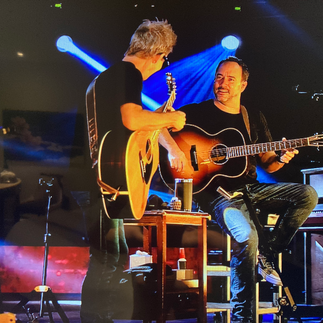
Dave Matthews and Tim Reynolds / Cancun, Mexico / February 18, 19, 20, 2022
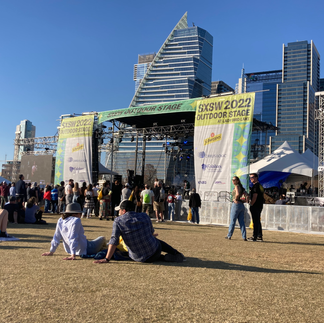
SXSW Outdoor Stage / Austin, TX / March 18, 2022
Ween / Austin, TX / April 28, 2022
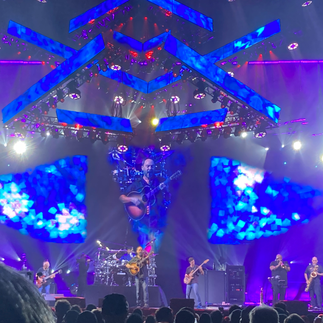
Dave Matthews Band / Austin, TX / May 11, 2022
Dave Matthews Band / Houston, TX / May 13, 2022
Dave Matthews Band / Dallas, TX / May 14, 2022
Comments