Reviving the Listening Experience: How the Romantic in Me Wants to Save the Album
- Dec 29, 2020
- 10 min read

When it comes to albums, I’m a romantic. Not only do I appreciate a well-crafted collection of songs, I remember what it was like to save up my allowance to purchase an album, to hold it in my hands and pour over the cover art and liner notes. Even now, in the streaming era, I actually stream albums. And, yes, even buy them occasionally.
But I realize this is alien to most people now. As much as I want the album to survive, wanting does not make it so. And technology, convenience, and transitions on how we listen to music are stacked towards it’s extinction. So, I am going to take a quick pass at the livelihood of the album: it’s persistence throughout history, the evolution of the concept album, and it’s current status in the digital age.
Evolution of the Album
I believe in my heart that the original albums were nineteenth-century song cycles. A song cycle is defined as “a group of individually complete songs designed as a unit, for solo or ensemble voices with or without instrumental accompaniment.” (a) The unifying element often came from the text - from the same poet, or surrounding the same topic or mood - or it could be from recurring musical elements. (1)
Franz Schubert (1797-1828) was the king of the lied -- a German art song for one singer and piano. Therefore, it is no surprise that he wrote some of the prominent song cycles of the time. Two of his most celebrated, Die schöne Müllerin (The Pretty Miller-Maid, 1823) and Winterreise (Winter’s Journey, 1827), used the poems of Wilhelm Müller. Winterreise includes twenty-four songs about a man reminiscing on a failed summer romance, in the winter. (b) Die schöne Müllerin uses text from a “Lieder play” written by several Berlin poets, including Müller. The songs tell the story of a young miller rejected by the maid of the mill. In the end, the miller drowns himself in a stream. (dramatic, yes, but listen to “Drown in My Own Tears” by Aretha Franklin [I Never Loved a Man the Way I Love You, 1967] and / or “Black” by Pearl Jam [Ten, 1991]) The song cycle depicts various scenes, including the miller setting out on a journey, arriving at the mill, realizing the maid prefers a hunter over him, and his drowning as the stream portrays a lullaby. (c)
Another lied master, Robert Schumann (1810-56), wrote the song cycles Dichterliebe (A Poet’s Love, 1840) and Frauenliebe und leben (A Woman’s Love and Life, 1840) upon marrying his beloved Clara Wieck Schumann. (b) Dichterliebe is made up of sixteen songs and uses poems from the Lyrisches Intermezzo section of Heinrich Heine’s Buch der Lieder (1827). (c) It does not have an all-encompassing narrative, but rather the theme of unrequited love throughout. The theme transitions from “a slightly questionable innocence and lyricism to a tone of abrasive cynicism that shows Heine’s famous ‘romantic irony’ at its most extreme.” (c)
Gustav Mahler (1860-1911) wrote five song cycles for orchestra and piano, including Kindertotenlieder (Songs on the Death of Children, 1901-4) that uses five poems by Friedrich Rückert. Das Lied von der Erde (The Song of the Earth, 1908) includes six poems translated from the Chinese by Hans Bethge. “The texts translate between frenzied grasping at the dreamlike whirl of life and sad resignation at having to part from all its joys and beauties.” (b)
Concept Albums and Format Changes
In 1955 Frank Sinatra released In The Wee Small Hours and revived the notion of the song cycle. Considered by many to be the first (or at least a precursor or continuation of the) concept album, it ordered the songs to create a narrative (d) and ushered in an era of the album as an artistic statement.
There was a shift from the single in the fifties to the album in the sixties. For the album, the artistic statement was important. The invention of the gatefold in the fifties allowed for liner notes to explain the concept. With the LP record, artists were no longer confined and could really tell a story. The artistic statement of the album became paramount. (e)
The consensus is that Wee Hours tells the story of Sinatra’s break up with Ava Gardner. However, there is no consensus on what is considered a concept album. Like with song cycles, the common thread could be instrumental, compositional, lyrical, or narrative. Applying the broadest definition of a unifying concept means that any soundtracks, compilations, cast recordings, greatest hits, tribute, Christmas and live albums could be considered concept albums. (f)
There is also great debate on what is considered the first concept album. Before Wee Hours, Woody Guthrie’s Dust Bowl Ballads, released in 1940, depicted migrant labor life in the thirties. (12) Nat King Cole’s Wild Is Love (1960) portrays the search for love. The concept album became more defined with progressive rock of the sixties. Notable examples include: Little Deuce Coupe (1963) by The Beach Boys, Ventures in Space (1964) by The Ventures, Rubber Soul (1965) by The Beatles, Freak Out! (1966) by Mothers of Invention, and Face to Face (1966) by The Kinks. (g)
Probably the most agreed-upon first concept album other than Wee Hours is Sgt. Pepper’s Lonely Hearts Club Band (1967) by The Beatles. This is due to many factors: the cover art, the fact that there is no break between the songs, the ending consisting of high frequency noise, being the first rock album to win a Grammy for album of the year, and representation of The Beatles transition into innovative studio techniques.But not all songs reflect the concept (“Lucy in the Sky with Diamonds,” “Being for the Benefit of Mr. Kite!”), and albums before fit the looser definition of a concept album. It’s just that Sgt. Pepper’s was more convincing and influential. (h)
Even though it represents the meta concept of a band within a band (Sgt. Pepper’s represents a fictional performance by a nonexistent band) and the cover art portrays The Beatles’ alter egos, Sgt. Pepper is not a rock opera. (h) The most definitive example of the concept album is the rock opera, which contains a story line with characters and plot. Examples include: The Who’s Quadrophenia (1973), Pink Floyd’s The Wall (1979), and more recently, Greenday’s American Idiot (2004).
In the eighties, MTV catered to singles over the album. When the CD came along and could fit more tracks, albums came to have more filler. People did not want to pay $15.99 for one or two good songs. Enter the file sharing practice, and a major formatting change to digital music in the 2000’s that altered the consumption of albums yet again. (e) In the streaming age, singles dominate again, and ownership of music has nearly disappeared. Music is available at anyone’s fingertips, which is great for the practical.

Are Albums Dying?
Out of all the streaming services, I’m gonna pick on the one I use, which is Spotify. Spotify’s stock playlists can give a song, for either new or established artists, valuable exposure. Nowadays, artists release lots of different versions of songs and collaborations aimed at getting on as many playlists as possible. Instead of releasing an album all at once, they may periodically release one song at a time in the hope of inhabiting playlists. So, songwriting is starting to adhere to playlists -- but this was also the case for Top 40 radio: “The format the music ends up on determines how people write for that format.” (i)
So, if you are like me, and do not want to see albums replaced by playlists, you may consider streaming services the enemy. Ben Beaumont-Thomas, argues a case for Spotify and claims it has helped create “music’s most radically democratic era” because music ownership is no longer a luxury. If we dig a song, we are no longer beholden to having to buy the CD single, download it illegally, or wait for it to come on the radio. He also points out that streaming leveled the playing field globally, most notably by giving Latin and Korean music exposure. He states that “Most people value convenience over physicality when it comes to film, news, and music” and that ordinary listeners “never read liner notes” (I guess I’m not an ordinary listener...but I knew that). He goes on to say that most people want music that caters to mood, and those with narrow taste do not have the time or motivation to seek out new music. (j)
Laura Snapes provides a rebuttal, and points out that artists hate Spotify, but need it. Streaming has brought a boom to the music industry, but Spotify’s royalty rates are insanely low. But musicians can’t afford to complain because of the power of putting a song on a playlist. Also, Spotify’s recommendations are based on data points that suggest more of the same. Therefore, artists are motivated to create more of the same to maintain a spot on a playlist. Snapes contends that “this limits music discovery and the sound of music itself.” Spotify benefits the customer more than the artist, and appears to be neutral but exercises a great amount of control behind the curtain. Rather than being a great equalizer, it “ functions as echo chambers, popularity begetting more support, the antithesis of musical democracy.” Snapes admits that “the genie can’t go back in the bottle,” and that she uses Spotify. But she places the power with the listener, and advocates being a “responsible listeners” and holding Spotify accountable to musicians. (j)
The Good News: Quality Prevails
Spotify responds to songs that are not skipped, and that listeners put on their own playlists. So, the songs still have to be good.
A study done by Rolling Stone brings good news. They admitted that when looking at the album as a product, grim predictions have come true. This is due to streaming providing “an ever-growing supply of all music, for a never-growing price of $10 per month.” (k) But they took on the admirable task of looking at the album as an experience. That is, trying to determine if anyone (besides me) listens to albums from start to finish anymore.
In October of 2020, they analyzed thousands of albums in various genres released in the past ten years to see if people stream complete albums. Each album was given a score from 1 to 100, a score of 100 indicating that the entire album was streamed. The results were hopeful: since 2015, the average score of the top 500 albums increased from 64 to 68. Of course, there are no metrics on this before streaming, but at least the average number hasn't gotten worse. (k)
I am optimistic that the power of music prevails, quality transcends format, and our relationship with music won't change. I agree that it always comes back to the quality of the song, and that the enrichment of past music is always there. (e) Author Edward Macan contends that the concept album is a recurrent theme in progressive rock due to bands of the 1960's “consistent use of lengthy forms such as the programmatic song cycle of the concept album and the multi movement suite underscores the hippies’ new drug-induced conception of time.” (l)
I’m a big picture kind of person, and we have seen how music listening has gone back and forth from being driven by singles or albums. Putting on my musicologist hat and big picture goggles, I see that both song cycles and concept albums have come back around.
Song cycles have expanded beyond Germany and the nineteenth-century, and resurfaced in the twentieth. Some examples include Aaron Copland’s (1900-90) Twelve Poems of Emily Dickinson (1950), Samuel Barber’s (1910-81) Hermit Songs (1952-53), and George Crumb’s (b. 1929) Ancient Voices of Children (1970). (b) 2019 produced some notable concept albums, such as Brittany Howard’s Jaime, Jenny Lewis’ On the Line, Nick Cave’s Ghosteen, and Joe Henry’s The Gospel According to Water. (m)
How We Listen
I can only hope that listening to albums as an experience will come back around. I realize that I am the minority in knowing exactly what song I want, or need, at any given moment. Spotify relies on the idea that mainstream audiences need more guidance, but I think they should give listeners more credit. Yes, I rely on Spotify to guide me at times, but where I ultimately land depends on...my own brain. It’s like streaming services are the GPS but I am still driving the car. And I managed to get places before GPS, somehow. I also think streaming services should place more stock in people’s loyalty to their favorite artists, and artists’ willingness to reach out and make themselves accessible to fans in new ways.
Even if the album is replaced by the playlist, the great hope is that listeners still have a choice.
The rules are constantly evolving, and time will tell, but there is a reason why the spirit of the album keeps resurfacing. On its most basic level, I think there is something to be said for creating and compiling a specific group of songs at a specific time in history. But also, albums pinpoint a time in the life of the artist, a period in the overall work of a band.
For me, a lot of albums are a timestamp, signifying my bestie from sixth grade, the summer before I started high school, moving to a new city, etc. I would venture to say that is the case for a lot of people, even if they do not quite realize it. There's still that kid in me that wants the pride and excitement of owning music I love, or at least think I love at the time. And who amongst us has not strung themself out for love? (n) Who can resist nostalgia?

Click here for the graphic conclusion!
Giving Props:
(a)Grove Music Online: https://www.oxfordmusiconline.com/grovemusic/view/10.1093/gmo/9781561592630.001.0001/omo-9781561592630-e-0000026208 ).
(b)Donald J. Grout & Claude V. Palisca. A History of Western Music. 6th ed. New York: W.W. Norton & Company, Inc., 2001
(c)Plantinga, Leon. Romantic Music. New York: W.W. Norton & Company, Inc., 1984.
(d)Rojek, Chris (2004). Frank Sinatra. Polity. ISBN 9780745630908.
(e)Soundbreaking: Episode 8: I am my music: http://soundbreaking.com/episodes/
(f)Elicker, Martina (2001). "Concept Albums: Song Cycles in Popular Music". Word and Music
(g)Danesi, Marcel (2017). Concise Dictionary of Popular Culture. Rowman & Littlefield. ISBN 978-1-4422-5312-4.; Boyd, Brian (4 June 2016). "The Beatles, Bob Dylan and The Beach Boys: 12 months that changed music". The Irish Times.
(h)Newsweek, Was Sgt. Pepper’s Lonely Hearts Club Band Really the First Concept Album?https://www.newsweek.com/beatles-sgt-peppers-lonely-hearts-club-band-first-concept-album-616359
(i)The Guardian: “They could destroy the album’: how Spotify’s Playlists have changed music forever : https://www.theguardian.com/music/2017/aug/17/they-could-destroy-the-album-how-spotify-playlists-have-changed-music-for-ever
(j)The Guardian: Has Ten Years of Spotify Ruined Music?
(k)Rolling Stone, Who Listens to Albums Anymore?
(l)Macan, Edward (1997). Rocking the Classics: English Progressive Rock and the Counterculture. Oxford University Press. ISBN 978-0-19-509887-7.
(m) Powers, Ann (17 December 2019). "The album is evolving". Slate. Retrieved 15 September 2020.
(n) Lyric from “Vanderlyle Crybaby Geeks” by The National (High Violet, 2010)
Concerts Fall 2019 ( X Spring 2020, Summer 2020, Fall 2020 X)







"The Lion King" / October 1, 2019 / London, UK
Gary Clark Jr. / October 5, 2019 / Austin City Limits Music Festival
Metric / October 5, 2019 / Austin City Limits Music Festival
The Cure / October 5, 2019 / Austin City Limits Music Festival
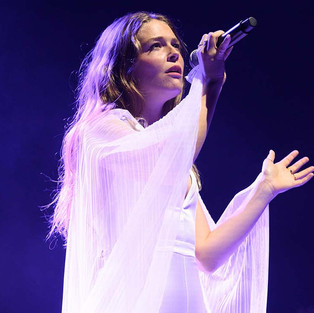
Maggie Rogers / October 19, 2019 / Austin, TX [photo courtesy of The Hollywood Reporter]
UT Choral Holiday Concert / December 7, 2019 / Austin, TX
Comments